
2026 Annual Report CIO
Steady Stewardship in an Extra-Ordinary Year
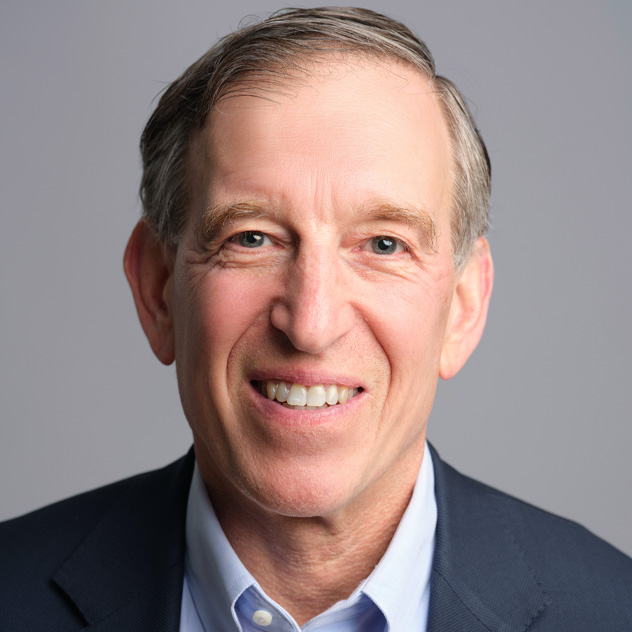
Hunter S. Reisner
Chief Investment Officer
Some fiscal years are somewhat quiet. Not this one. Our Fiscal Year 2026 (FY 2026) ending June 30 contained:
- a war with its associated uncertainty;
- change of leadership at the Federal Reserve;
- disagreements as to whether inflation is increasing or on a downward path to the 2% nirvana;
- explosive growth in the use of artificial intelligence (A.I.);
- the largest initial public offering in history;
- and record prices for stocks, gold, and silver (while the price of bitcoin, fell nearly in half).
Through it all, the Fund earned 12.3% during FY 2026, finishing the year with $10.6 billion in assets.
The fiscal year seemed to be a three-act play but without the classic resolution in the third act. Through January 2026, the Federal Reserve cut rates three times and money flowed into nearly everything: U.S. and international stocks, gold, silver, and above all, anything that seemed to have a link with A.I. Then, over the next few weeks: the White House nominated Kevin Warsh to lead the Federal Reserve; gold suffered its sharpest fall in years; Iran closed the Strait of Hormuz, leading to the price of oil doubling from a December low of $55 per barrel to above $119. The final act was a resolution few expected. First-quarter corporate earnings grew more than 25%, the fastest pace in over four years, and analysts raised their estimates for the year ahead rather than trimming them, as they often do as the year goes along; a June agreement reopened the Strait and the price of oil round-tripped down to the $60s; stocks closed June at record highs; and Fed watchers became less sure as to whether and when the Fed might change short-term interest rates.
How the Fund Performed
Y Retirement continues to achieve its investment objectives. Most importantly, we seek to grow participants’ retirement assets over time through a diversified, risk-controlled portfolio, enabling us to fulfill our commitments and provide strong benefits for years to come. Achieving that objective requires us to invest with a long-term horizon rather than optimize the portfolio for any single year or market environment.
Over the past 10 years, the Fund has earned 9.1% per year, in line with its composite benchmark (see page 12 in the full Annual Report) and well above the Fund’s 6%+ long-term return objective. This period included interest rates remaining fairly low and then falling toward zero before rising sharply, a global pandemic, the historic 2022 stock and bond declines, and renewed geopolitical conflict. Across these different environments, the portfolio continued to compound participants’ retirement assets, which is essential for providing lifetime annuity payments when each of us retires, whether that occurs in the next several years or decades from now.
The 12.3% that the Fund generated in FY 2026, while healthy in absolute terms, nevertheless trailed our composite benchmark, which rose 13.9%. We ended up outperforming our benchmark in nearly every asset class yet still trailed the composite benchmark on a total portfolio basis due largely to the incredible gains of International Equity indices. Equity returns were concentrated in the A.I. theme, which extended to many sectors of the equity markets, domestic and international, public and private. A small group of Asian semiconductor makers and a wide array of American technology companies produced an outsized share of the world’s equity gains. Our portfolio is intentionally built on diversification, not concentration in one asset class or a narrow set of themes. This serves Y Retirement and our participants over the long term.
For Y Retirement, Public Equities were the largest contributor to returns, with U.S. equities outperforming their benchmark and particularly strong results from biotechnology and semiconductor investments. Credit, Real Estate, and Diversifying Strategies also exceeded their respective benchmarks. Notably, Diversifying Strategies generated positive returns during the March quarter, when equity markets declined, demonstrating the value of the portfolio’s diversifying and defensive exposures. Private Equity and Natural Resources also produced solid returns and outperformed their respective benchmarks.
Our International Equities notably underperformed their benchmarks, due meaningfully to the A.I. concentrations that drove indices higher. Our Treasury holdings generated modest returns, broadly in line with their benchmark. We maintain high-quality Treasury exposure not necessarily for their return potential every year, but because they can provide liquidity, stability, and protection during periods of severe market stress – enabling us to stand behind our promise never to reduce account values.
Outlook
Looking ahead, three themes deserve particular attention. First, the uncertain path of inflation from here will likely lead to volatility in interest rates. With less forward guidance from the Federal Reserve, markets may react more sharply to each new inflation, employment, and growth report. In this environment the value of having liquidity to be opportunistic grows, as does the value of investments that do not depend on interest rates moving in only one direction.
Second, A.I. is creating significant investment and productivity opportunities, but the scale of current spending also raises an important question as to whether future earnings will ultimately justify today’s expectations and valuations. We aim to have the Fund participate in the benefits of technological progress without becoming overly dependent on a narrow group of companies or a single investment theme.
Third, geopolitical conflict continues to threaten energy markets, trade routes, and supply chains. The experience of the past year demonstrated how quickly a regional conflict can affect asset and product prices of all types.
We are not attempting to predict which of these themes will dominate markets in the coming year. Instead, we continue to position the Fund with diversified return drivers, ample liquidity, and risk exposures that we believe can perform across a wide range of scenarios.
Our focus and responsibility remain: Maintaining a diversified, liquid, and resilient portfolio capable of compounding over time and providing reliable lifetime retirement income.


